
Hundreds of thousands of Canadian gun owners could face prison sentences if they refuse to surrender newly prohibited firearms under a federal “buyback” program that critics say amounts to forced confiscation disguised as “voluntary” compliance.
Since May 2020, the Canadian government has pursued what it calls an “assault-style firearms compensation program,” banning thousands of firearms and offering payment to owners who turn them in.
Gun owners who fail to comply by October 2026 could face up to five years in prison for illegal possession.
Gun rights advocates and several provincial governments argue the program will overwhelmingly impact law-abiding citizens while doing little to curb crime.
“We’re finding that they’re running into a lot of compliance issues,” said Blair Hagen, an executive with the National Firearms Association.
“They have no idea where [the guns are] or who has them.
“So it’s proving to be a very, very difficult situation for the government.”
Trudeau’s Order-in-Council Ban
The firearm ban was enacted through an order-in-council issued in May 2020 by then–Prime Minister Justin Trudeau, a mechanism that allows sweeping regulatory changes without a parliamentary vote.
Under the policy, participation in the buyback is described as “voluntary,” but compliance with the ban is mandatory.
“While participating in the program is voluntary, compliance with the law is not,” the federal government states on its website.
Firearm owners must “safely dispose of or permanently deactivate” prohibited weapons or risk criminal liability.
The government has extended an amnesty for possession three times, with the current deadline set for October 30, 2026.
‘Voluntary’ in Name Only
Gun rights groups dispute the government’s framing.
“If the option is either turn them in or you’re going to jail, I would not consider that voluntary,” said Justin Davis, public affairs director for the National Rifle Association.
The federal government also does not guarantee compensation, stating only that owners “may receive compensation subject to availability of program funds.”
Carney Denies Confiscation
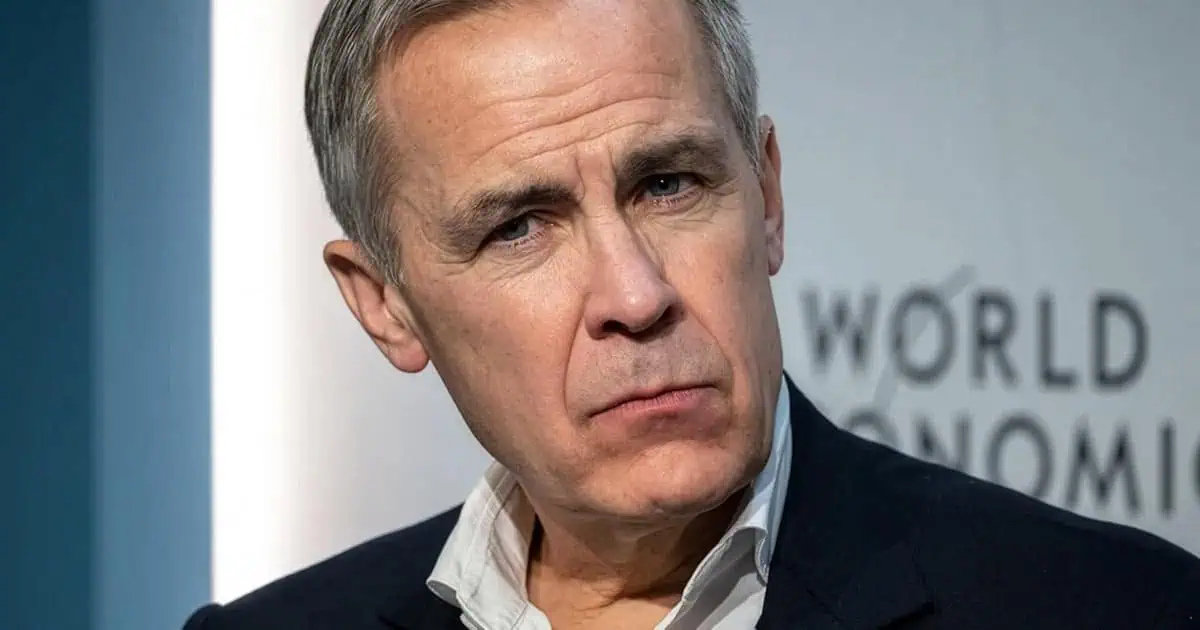
Globalist Prime Minister Mark Carney has repeatedly denied that the policy constitutes confiscation.
“This is not about confiscation,” Carney said during a podcast interview in September 2025.
“This is about voluntary return of firearms for compensation.”
Carney also claimed that the ban does not affect hunting rifles or sport-shooting firearms.
However, critics point out that the policy includes explicit carve-outs for Indigenous subsistence hunters, suggesting that commonly owned firearms are indeed affected.
Provinces Refuse to Enforce the Ban
Several provinces, including Alberta, Saskatchewan, Manitoba, Ontario, New Brunswick, and Yukon, have refused to assist federal authorities in enforcing the ban.
“We will have nothing to do with this program,” said Teri Bryant, Alberta’s chief firearms officer.
“We will not spend any Alberta taxpayer dollars on this program.”
As a result, federal authorities would be responsible for enforcement without local law enforcement support.
“If the feds want to try and enforce it, they are going to have to do it themselves,” Hagen said.
“The logistics get even more insurmountable and the price goes up.”
Program Yields Minimal Results
A six-week pilot run in fall 2025 reportedly recovered just 25 firearms, far below the government’s expectation of roughly 200.
Despite that outcome, officials declared the pilot a success.
Hagen said the lack of public participation reflects widespread resistance among lawful gun owners.
“There is a civil disarmament agenda in that bureaucracy,” he said.
“It started many years ago.”
Warnings for the United States
Gun rights advocates argue the Canadian model is a cautionary tale for the United States.
“There’s no criminal in the world who’s going to turn in their firearm for a few dollars,” Davis said.
“These policies disarm law-abiding citizens and create more soft targets.”
Gun confiscation schemes are already backed by top Democrats.
During her failed 2019 presidential campaign, former Vice President Kamala Harris openly supported a mandatory gun buyback.
“We have to have a buyback program, and I support a mandatory gun buyback program,” Harris said at the time.
Advocates note that Canada lacks constitutional protections comparable to the Second Amendment.
“You can ban firearms on paper,” Hagen said, “but actually making confiscation happen is another thing entirely.”
Whether Canada’s program collapses under its own cost and complexity, or is repealed by a future government, remains an open question.
However, laws such as this one are almost always a one-way street.
READ MORE – Canadian Government Euthanizes Woman Against Her Will

Our comment section is restricted to members of the Slay News community only.
To join, create a free account HERE.
If you are already a member, log in HERE.