
Concerns over Europe’s military readiness have intensified in recent years, particularly following the war in Ukraine and renewed pressure from President Donald Trump for NATO members to meet their defense spending obligations.
The conflict in Ukraine has underscored the role of attrition warfare and sustained troop deployments, raising questions about manpower capacity across European militaries.
A Washington, D.C.–based defense think tank, the Center for a New American Security (CNAS), recently addressed the issue in an article published by Foreign Policy.
The report highlights demographic challenges that could complicate recruitment efforts across the continent.
Demographic Decline and Recruitment Shortfalls
CNAS noted that Europe faces a shrinking working-age population, which could limit the pool of potential military recruits:
“Closing manpower gaps may prove harder than writing bigger checks.
“The continent’s demographic crisis compounds the problem: Births in the European Union fell below 4 million in 2022 for the first time since 1960, shrinking the pool of potential recruits as geopolitical threats—chief among them, Russian aggression—demand larger, more capable forces…”
The report also cited European Commission estimates projecting a 43 million reduction in the EU’s working-age population by 2070.
CNAS argued that technological advances, including drone warfare, have not eliminated the need for large numbers of personnel.
“Ukraine’s grinding war of attrition has laid bare an uncomfortable truth: Emerging capabilities in the form of high-tech weaponry cannot substitute for boots on the ground,” the report states.
“Soldiers, sailors, marines, coast guardsmen, and airmen are the backbone of national defense…”
Migration as a Potential Resource
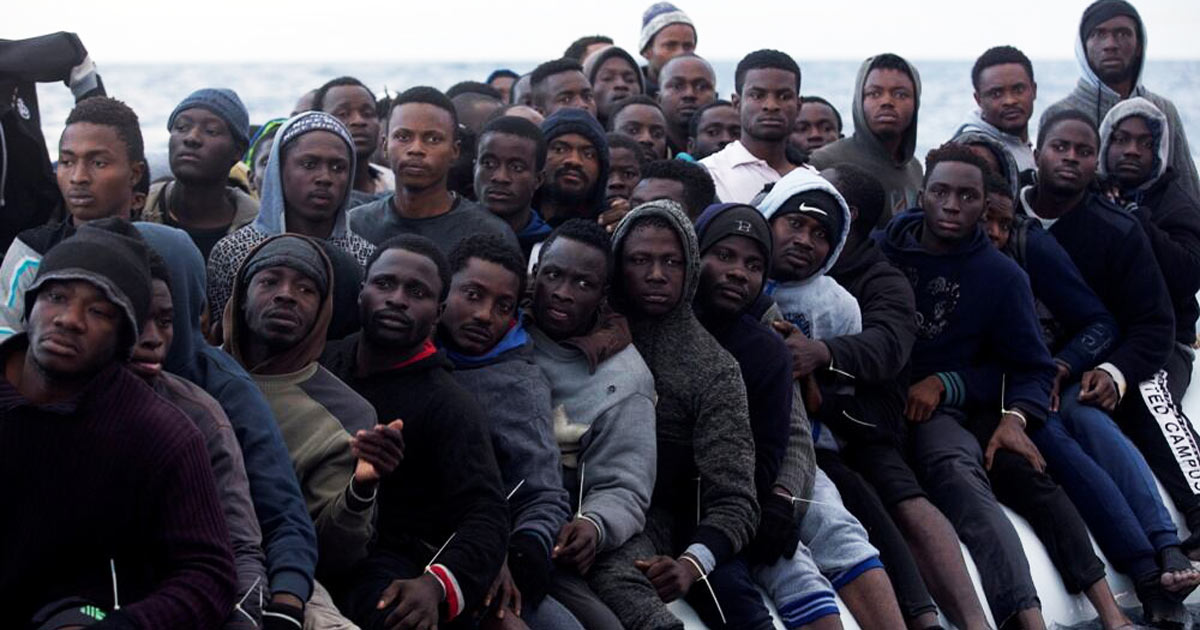
The think tank suggested that ongoing floods of illegal migration into Europe present both political and logistical questions.
“…Meanwhile, Europe continues to grapple with significant migration flows from Africa, the Middle East, and other regions,” the article asserts.
“These arrivals, often young, male, and seeking better opportunities, represent exactly the demographic cohort European militaries desperately need.
“Many migrants arrive with valuable skills: language abilities, cultural knowledge of strategic regions, technical expertise, and, most importantly, motivation to prove themselves and build new lives.”
The article framed military service as a possible pathway to integration and citizenship:
“The promise of citizenship provides powerful motivation, and military service demonstrates commitment to the nation in the most tangible way possible.
“The United States demonstrates that national identity is forged through shared sacrifice, not shared ancestry…”
Policy Developments in Europe
Several European countries have begun exploring policies that could expand recruitment pools.
Ireland recently announced it is reviewing a program that would allow fast-track citizenship for immigrants who volunteer for military service.
Officials cited national defense capacity as the primary rationale.
Germany, France, and Spain have also examined measures to broaden eligibility for enlistment.
These initiatives come amid broader debates within Europe about immigration, integration, and demographic sustainability.
Broader Political Debate
The CNAS analysis described political polarization around migration policy:
“The political center regarding migration has collapsed in the face of far-right xenophobic approaches to the migration file, such that few policy initiatives other than hardening land and maritime borders and cutting deals to send migrants away see the light of day…”
Supporters of expanded recruitment policies argue that declining birthrates and evolving security threats require innovative approaches to force structure.
Critics, meanwhile, question whether such proposals address underlying demographic and economic concerns, or whether they risk deepening political divisions over immigration.
Many fear that the move to offer third-world migrants a career in the military and citizenship could act as a draw to encourage more illegal immigration.
The debate reflects ongoing tensions within Europe over national identity, defense preparedness, and migration policy, issues likely to remain central as governments assess long-term security strategy in light of current geopolitical challenges.
READ MORE – Democrat Rep Steve Cohen: American Citizens Are ‘Worst of the Worst,’ Not Illegal Aliens

Our comment section is restricted to members of the Slay News community only.
To join, create a free account HERE.
If you are already a member, log in HERE.