
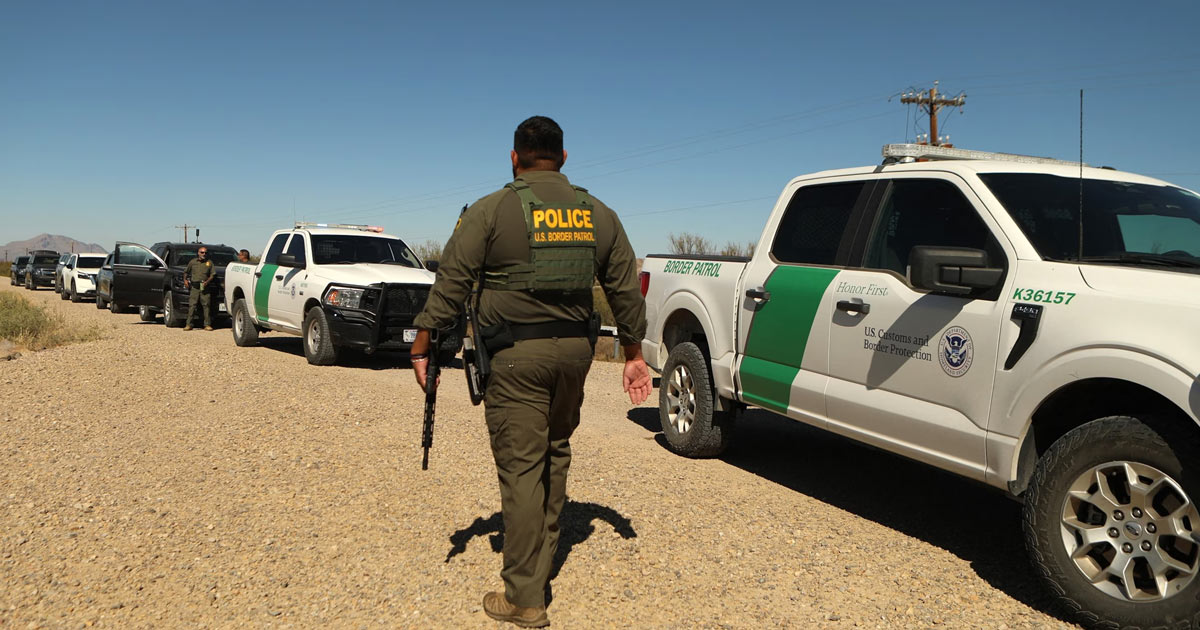
U.S. federal authorities have taken control of more than 134 acres in Texas that had been used by a Mexican drug cartel for smuggling operations, according to an announcement from Customs and Border Protection (CBP).
In a post on X, CBP declared:
“We took the land and everything on it.”
A video accompanying the message showed law enforcement officers arresting multiple individuals and described the property as belonging to the westside Gulf Cartel, which it identified as a terrorist organization operating near Rio Grande City, Texas.
“They thought they were untouchable,” the video stated.
“They were wrong. Over 134 acres of land and property, taken from the westside Gulf Cartel, a terrorist organization operating near Rio Grande City, Texas.”
WATCH:
🚨 CARTEL PROPERTY SEIZED 🚨
Over 134 acres near Rio Grande City, TX—used by a drug cartel for smuggling—is now out of their hands. We didn't just make arrests; we took the land and everything on it.
Message to the cartels: Keep smuggling, lose it all. We’re coming for… pic.twitter.com/T3AkTLjldh
— CBP (@CBP) February 10, 2026
The Gulf Cartel, a Mexico-based drug trafficking organization, has been linked to arms smuggling, human trafficking, kidnappings, and murders involving American citizens.
Authorities have also warned that cartels sometimes exploit U.S. land, including areas affected by sanctuary policies or tribal sovereignty, to cultivate marijuana and stage smuggling activity.
CBP issued a direct warning to cartel networks:
“You think this is just about arrests? It’s not.
“We are dismantling your operations from the ground up.
“We’re cutting out your safe houses, your staging areas, your corridors.
“This is your warning.”
Broader Federal Effort to Target Cartel Assets
The seizure comes amid a wider federal campaign to disrupt cartel finances and infrastructure.
In May, the Treasury Department’s Office of Foreign Assets Control sanctioned two senior members of the Mexico-based Cartel del Noreste, blocking all U.S.-linked assets tied to the individuals.
In March, the same office sanctioned six individuals and seven entities connected to money-laundering operations supporting the Sinaloa Cartel.
Treasury Secretary Scott Bessent said at the time:
“Laundered drug money is the lifeblood of the Sinaloa Cartel’s narco-terrorist enterprise, only made possible through trusted financial facilitators like those we have designated today.”
“Treasury, as part of a whole-of-government approach to addressing this pressing national security threat, will use all available tools to target anyone who assists the cartels in furthering their campaign of crime and violence.”
Legislative Push to Expand Anti-Cartel Powers
Sen. Mike Lee (R-UT) has introduced the Cartel Marque and Reprisal Authorization Act, legislation that would authorize President Donald Trump to commission private U.S. operators under letters of marque to seize cartel assets on land and at sea.
Letters of marque historically allowed governments to empower private actors to capture enemy property, an approach once widely used against piracy.
Under Lee’s proposal, authorized operators could use “all reasonably necessary means” to seize cartel-linked assets outside the United States.
“The Constitution provides for Letters of Marque and Reprisal as a tool against the enemies of the United States,” Lee said.
“Cartels have replaced corsairs in the modern era, but we can still give private American citizens and their businesses a stake in the fight against these murderous foreign criminals.
“The Cartel Marque and Reprisal Authorization Act will revive this historic practice to defend our shores and seize cartel assets.”
Escalating Pressure on Cartels
In January, President Trump said the United States would begin launching strikes targeting cartels operating in Mexico.
The following month, Mexico transferred 37 cartel members to U.S. custody amid pressure from the Trump administration to intensify enforcement.
Earlier, in February 2025, the State Department formally designated several Mexican drug cartels and transnational criminal gangs as global terrorist organizations, allowing U.S. authorities to block their assets and cut them off from the American financial system.
Border Enforcement and Financial Disruption
During a Feb. 10 House hearing, CBP Commissioner Rodney Scott testified that cartels profit from human trafficking, including the exploitation of children and forced labor, using those proceeds to sustain broader criminal networks.
“Breaking this cycle requires certainty of consequences and complete border security,” Scott said.
“When we secure the border and deny illegal entry, we are not just enforcing a statute—we are bankrupting a cartel operation and protecting innocent people.
“When illegal entry no longer guarantees release into the interior, and when [unaccompanied alien children] are protected and monitored, the cartels lose their product, their presence in the United States, and their ability to profit from our failures.”
CBP also reported that Border Patrol released zero illegal immigrants into the United States in January for the ninth consecutive month.
“Every individual apprehended was processed according to law—a milestone unmatched in modern border history,” the agency said.
The Texas land seizure marks one of the most visible signs yet of the administration’s expanding strategy to dismantle cartel infrastructure, finances, and cross-border operations at their source.
READ MORE – FBI Arrests Dozens in Massive Chinese Fentanyl Trafficking Ring Bust

Our comment section is restricted to members of the Slay News community only.
To join, create a free account HERE.
If you are already a member, log in HERE.