
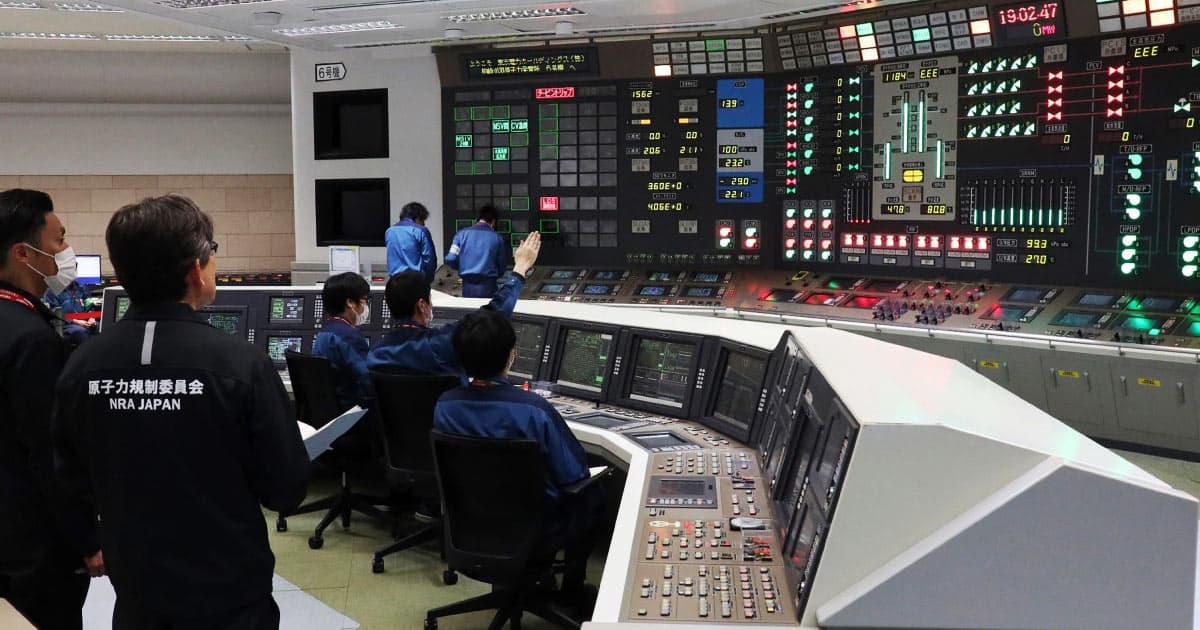
Japan has resumed operations at the world’s largest nuclear power facility, marking a pivotal step in the nation’s return to nuclear energy nearly 15 years after the Fukushima disaster reshaped global attitudes toward atomic power.
The restart occurred at the Kashiwazaki-Kariwa Nuclear Power Plant in Niigata Prefecture, a seven-reactor site with a total generating capacity of 8.2 gigawatts, enough electricity to power millions of homes.
The facility, operated by the Tokyo Electric Power Company (TEPCO), is also notable for housing the world’s first advanced boiling water reactor design.
Although Kashiwazaki-Kariwa was not damaged by the 2011 Tōhoku earthquake and tsunami, all seven reactors remained offline for more than a decade amid tightened safety rules and intense public scrutiny following Fukushima.
Political Division and Public Protest
The restart exposed deep divisions within the local community.
During a December assembly session in Niigata, lawmakers backed the resumption of operations despite vocal opposition.
“This is nothing other than a political settlement that does not take into account the will of the Niigata residents,” one assembly member said during debate.
Roughly 300 protesters gathered outside the assembly building, carrying signs such as “No Nukes” and “Support Fukushima.”
“I am truly angry from the bottom of my heart,” said Kenichiro Ishiyama, a 77-year-old protester from Niigata city.
“If something was to happen at the plant, we would be the ones to suffer the consequences.”
Reactor Restart and Safety Checks
The reactor, offline for more than a decade, was brought back online on February 9.
TEPCO said it would continue intensive safety verification as operations resume.
“We will continue to conduct integrity checks of the plant equipment under actual steam operating conditions, while fully and sincerely responding to inspections by the Nuclear Regulation Authority,” company officials said.
According to technical reporting, the 1,356-megawatt advanced boiling water reactor reached criticality shortly after startup, meaning it achieved a self-sustaining nuclear chain reaction.
TEPCO emphasized continued safety monitoring:
“We will continue to demonstrate through our actions and results that we are making safety our top priority at the Kashiwazaki-Kariwa Nuclear Power Plant.”
An earlier restart attempt in January was halted after an alarm in the control-rod monitoring system stopped withdrawal of one control rod, prompting an investigation before operations resumed.
Power generation and transmission are expected to follow.
Energy Security Driving Nuclear Return
Japan’s renewed push toward nuclear energy reflects mounting economic and strategic pressure.
Prime Minister Sanae Takaichi has voiced support for reactor restarts as the country struggles with the high cost of imported fossil fuels.
Fossil fuels supply roughly 60–70 percent of Japan’s electricity.
Last year alone, Japan spent 10.7 trillion yen, about $68 billion, on imported liquefied natural gas and coal, accounting for roughly one-tenth of total national import costs.
Despite a declining population, officials expect electricity demand to rise in the coming decade, driven in part by the rapid expansion of artificial-intelligence data centers.
Tokyo has set a goal of doubling nuclear power’s share of the energy mix to 20 percent by 2040.
Japan’s largest nuclear operator, Kansai Electric Power, has already signaled further expansion, announcing plans to begin surveys for a new reactor in western Japan.
It would mark the country’s first potential new nuclear plant since Fukushima.
Strategic Turning Point
The restart of Kashiwazaki-Kariwa represents more than a technical milestone.
It signals Japan’s accelerating shift back toward nuclear power as a cornerstone of energy security, economic stability, and future technological growth.
After more than a decade defined by shutdowns and uncertainty, the world’s third-largest economy is once again betting on atomic energy to power its future.

Our comment section is restricted to members of the Slay News community only.
To join, create a free account HERE.
If you are already a member, log in HERE.