
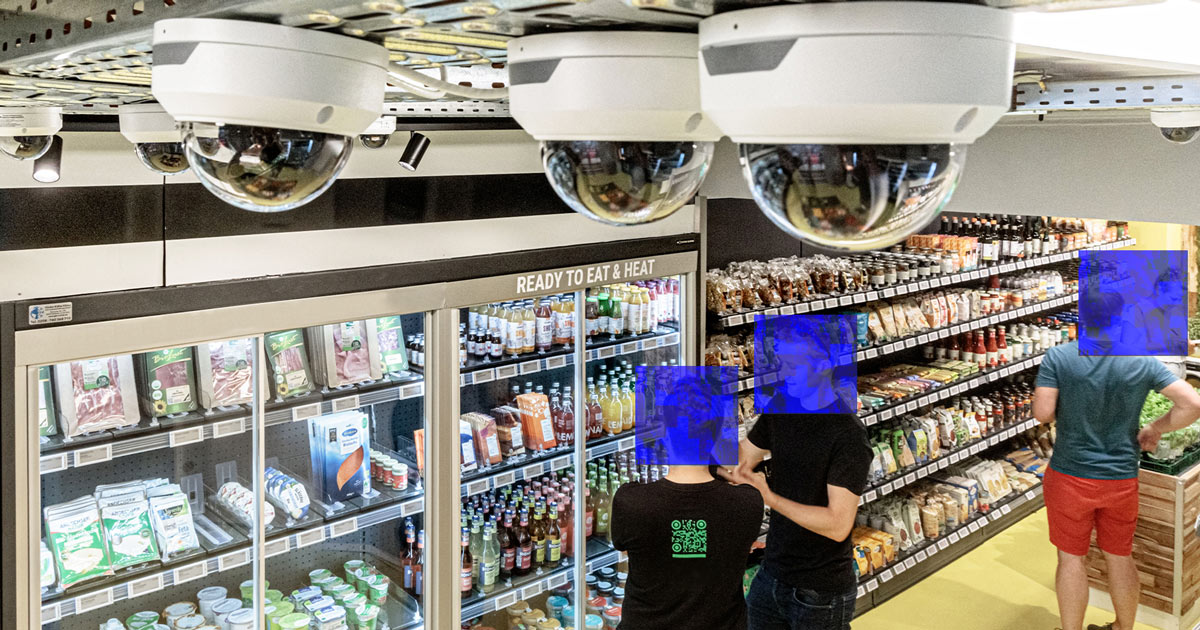
A disturbing controversy is unfolding regarding one of New York City’s most popular grocery chains after Wegmans began deploying biometric surveillance technology across multiple locations to collect data on all shoppers.
Wegmans is known for its loyal customer base and upscale shopping experience.
According to Gothamist, stores in Manhattan and Brooklyn advise customers that their faces, eyes, and voices may now be scanned and stored by in-store surveillance systems.
The data collection policy was revealed in new signage posted in the affected Wegmans stores.
The notice informs shoppers that biometric information is collected “to protect the safety and security of our patrons and employees.”
For many customers, the explanation has done little to ease concerns.
What was once a routine grocery errand has now taken on the feel of a monitored environment, with cameras and analytics systems quietly cataloging physical identifiers without meaningful transparency about how the data will be used.
The shift marks a significant evolution from Wegmans’ prior public posture.
In 2024, the company characterized its biometric program as primarily employee-focused and claimed that any customer data collected inadvertently would be deleted.
That assurance no longer appears in the company’s public explanations.
Wegmans has also declined to clarify how long such data is stored, who has access to it, or whether information may be shared with outside entities, including law enforcement.
Some shoppers say they now feel they are being treated with default suspicion.
“I really don’t like it,” said customer Johnny Jerido, 59, reacting to the new policy.
“I don’t want no one to think I’m stealing anything or doing anything illegal.”
Others questioned why biometric monitoring is being normalized at all.
“We should be able to shop freely without data being saved on us. That’s obvious,” said Blaze Herbas, 29.
Privacy advocates are warning that the implications extend far beyond simple store security systems.
Will Owen of the Surveillance Technology Oversight Project called the practice “really chilling,” adding:
“It’s really chilling that immigrant New Yorkers going into Wegmans and other grocery stores have to worry about their highly sensitive biometric data potentially getting into the hands of ICE.”
Unlike traditional identifiers such as passwords or payment information, biometric identifiers cannot be changed if compromised, increasing the long-term risk associated with misuse or exposure.
Efforts to regulate the private use of biometric surveillance in New York City have largely stalled.
A City Council proposal introduced in 2023 to impose tighter restrictions failed to advance, leaving in place only a limited 2021 law that requires businesses to post notices, but does not mandate consent, restrict retention, or establish strong enforcement mechanisms.
As a result, the practical burden falls on consumers themselves, who either accept the surveillance or avoid the store entirely.
Legal recourse exists in theory, but requires individuals to pursue action on their own.
It’s a hurdle privacy advocates say makes real accountability unlikely in practice.

Our comment section is restricted to members of the Slay News community only.
To join, create a free account HERE.
If you are already a member, log in HERE.