
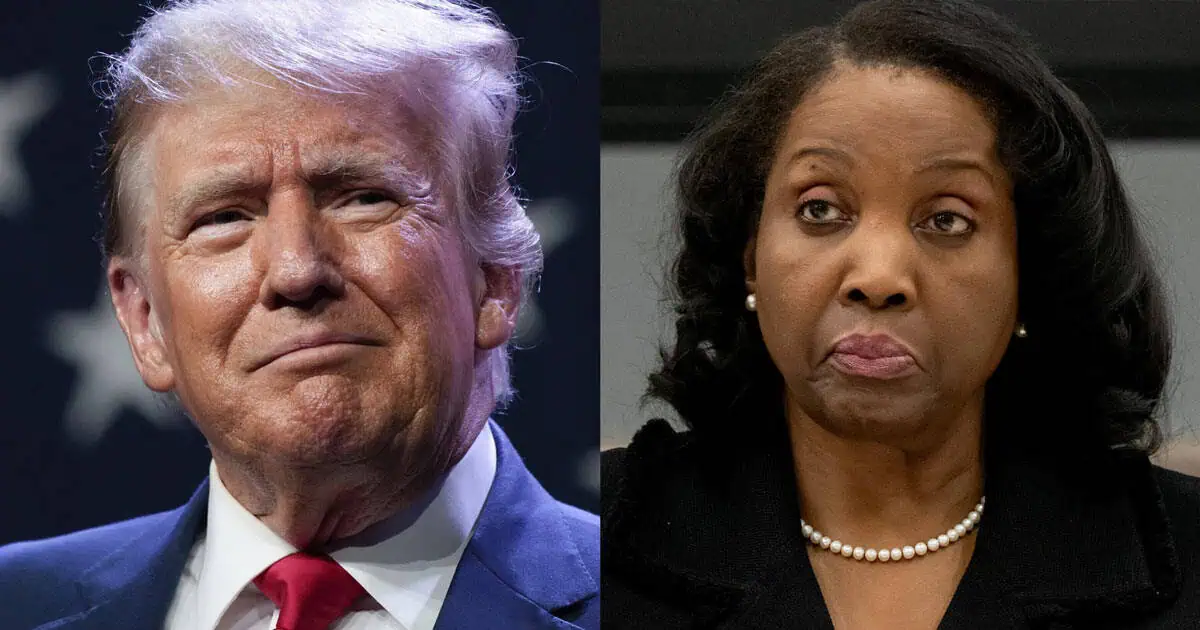
The U.S. Supreme Court appears poised to block President Donald Trump’s effort to remove Federal Reserve Governor Lisa Cook, signaling potential limits on presidential authority over independent agencies.
This week, the Court heard oral arguments in Trump v. Cook, a case arising from Trump’s attempt to oust Cook from the Federal Reserve’s Board of Governors.
A majority of justices expressed skepticism toward the administration’s request to allow Cook’s immediate removal while litigation continues.
At issue is whether Trump had sufficient “cause” under the Federal Reserve Act to dismiss Cook, who was first appointed in 2022 and reappointed in 2023 by former President Joe Biden to a 14-year term.
The statute permits removal only “for cause,” a standard that became the central focus of the Court’s questioning.
The case has broader implications for presidential authority over independent, multi-member agencies like the Federal Reserve.
Trump has repeatedly criticized the Fed since returning to office, particularly over interest rate policy, though the central bank did lower rates later in the year.
Trump’s effort to remove Cook began in August 2025, when he posted a letter on Truth Social alleging that she committed mortgage fraud prior to joining the Fed.
According to the administration, Cook misrepresented her primary residence on loan applications for properties in Michigan and Atlanta within a short time span.
Cook has denied the allegations.
Following Trump’s public statements, Cook filed suit in federal court in Washington, D.C., challenging her removal. U.S. District Judge Jia Cobb issued an order allowing Cook to remain in her position while the case proceeds, a ruling later upheld by a federal appeals court.
The administration then appealed to the Supreme Court.
During oral arguments, the justices pressed the administration on how courts are meant to evaluate “cause” under the Federal Reserve Act if an improperly removed official cannot be reinstated.
Chief Justice John Roberts questioned the practical value of judicial review under such circumstances.
Justice Elena Kagan raised similar concerns, suggesting that the statutory cause requirement would be effectively meaningless if there is no remedy for wrongful removal.
Justice Brett Kavanaugh questioned why the administration opposed additional procedural safeguards, asking, “What’s the fear of more process here?”
He warned that allowing presidents to remove Fed governors without clear procedural protections could invite retaliation by future administrations based on policy disagreements rather than misconduct.
The potential economic implications also surfaced during arguments.
Justice Amy Coney Barrett referenced concerns raised in amicus briefs, warning that Cook’s removal could disrupt financial markets.
The administration disputed those claims.
Solicitor General D. John Sauer urged the Court to discount such warnings, describing them as “very elite opinion.”
Cook’s legal team, led by former Solicitor General Paul Clement, countered that removing her without due process would cause “enormous irreparable harms,” citing the Federal Reserve’s central role in global markets.
A final decision is expected by summer.
While Trump has successfully removed officials from other agencies since returning to office, the Court’s questioning suggests the justices may treat the Federal Reserve differently due to its statutory independence and economic significance.
The ruling could shape the balance between executive authority and agency autonomy for years to come.

Our comment section is restricted to members of the Slay News community only.
To join, create a free account HERE.
If you are already a member, log in HERE.